The most common picture I see of “using AI” is someone typing a prompt and waiting for an answer.
Prompt. Receive. Copy. Paste. Maybe one round of cleanup. Move on.
That’s working from AI. The model produces, the human consumes, the relationship ends at the output.
What I want to describe in this piece is something different. A session I had last week with my AI partner, Bishop. Not because the session itself was remarkable. It wasn’t. It was a normal Tuesday’s worth of chip-away work. What I want to name is the rhythm of that work, because the rhythm is the part that doesn’t show up in any of the prompt-and-pray content that dominates the AI conversation right now.
i.The session
Here’s what the session actually covered, in order.
Pivoted my session-start cache from “load the most recent handoff” to “load a curated hot file.” Token win, around seventy to ninety percent on session-start context. Audited the project wiki for sparseness and found three docs that were thin, two that didn’t exist yet, one that had drifted out of sync with the underlying memory files. Reframed a priority call I’d been holding for a week (long-form blog work versus wiki consolidation, walked through which one was actually load-bearing for the next two weeks, committed to a sequence). Ran a two-pass wiki update against the audit. Prototyped a magazine layout for the blog. Forked the brand mark into a more distinctive variant. Spec’d the blog itself, end-to-end, in a document that will drive the next two weeks of build work.
Seven units of work in one session. Each one a decision Bishop surfaced and I made. Each one a small lock.
ii.The pattern
If you watched a recording of that session, what you’d see is not a person typing prompts and receiving answers. You’d see something closer to two people at a working table. One of them doing most of the talking and laying out artifacts. The other one making picks.
The pattern, in shorthand:
Bishop surfaces options. I pick. Bishop executes the pick. Bishop surfaces what came of it, including what didn’t work, including what opened up because of it. I pick again. Repeat.
That’s the whole shape.
It’s not “AI gives you the answer.” It’s not “AI is your assistant.” It’s not “AI does the work while you supervise.” Those framings all assume the AI is the one driving the artifact toward completion and the human is somewhere on the spectrum between consumer and reviewer.
This is something else. The artifact isn’t being driven by either side. It’s emerging from the picks. The session is a series of forks, and the forks belong to me, and the surfacing of forks belongs to Bishop, and the execution between forks belongs to Bishop too. The thing we made at the end of the session is the trace of the picks.
The thesis Working FROM AI is one rhythm.Working WITH AI is another.The output isn't the same shape.
iii.Why this matters
The reason I’m bothering to write this down is that I think most of the public conversation about AI is being conducted by people who have only ever worked from AI. They’ve prompted. They’ve received. They’ve judged the output good or bad. They’ve extrapolated from that to what AI can or can’t do.
Working with AI looks different. It also produces different output.
When you’re working from AI, the ceiling is the model’s defaults. You ask for a blog post, you get a blog-post-shaped output, and the post reads like a blog post written by a model trained on a million blog posts. The cadence is generic. The structural moves are predictable. The voice is no one’s. You can tell.
When you’re working with AI, the picks shape the output at every fork. The model produces a draft, you reject the third paragraph, the model surfaces three alternative angles, you pick one, the model writes it, you keep two sentences and reject the rest, the model surfaces what’s load-bearing about those two sentences, you confirm, the model rebuilds. By the end the output bears no resemblance to what would have come out of a single prompt. The voice is yours because you picked it. The structure is yours because you sequenced it. The premises are yours because you grounded them.
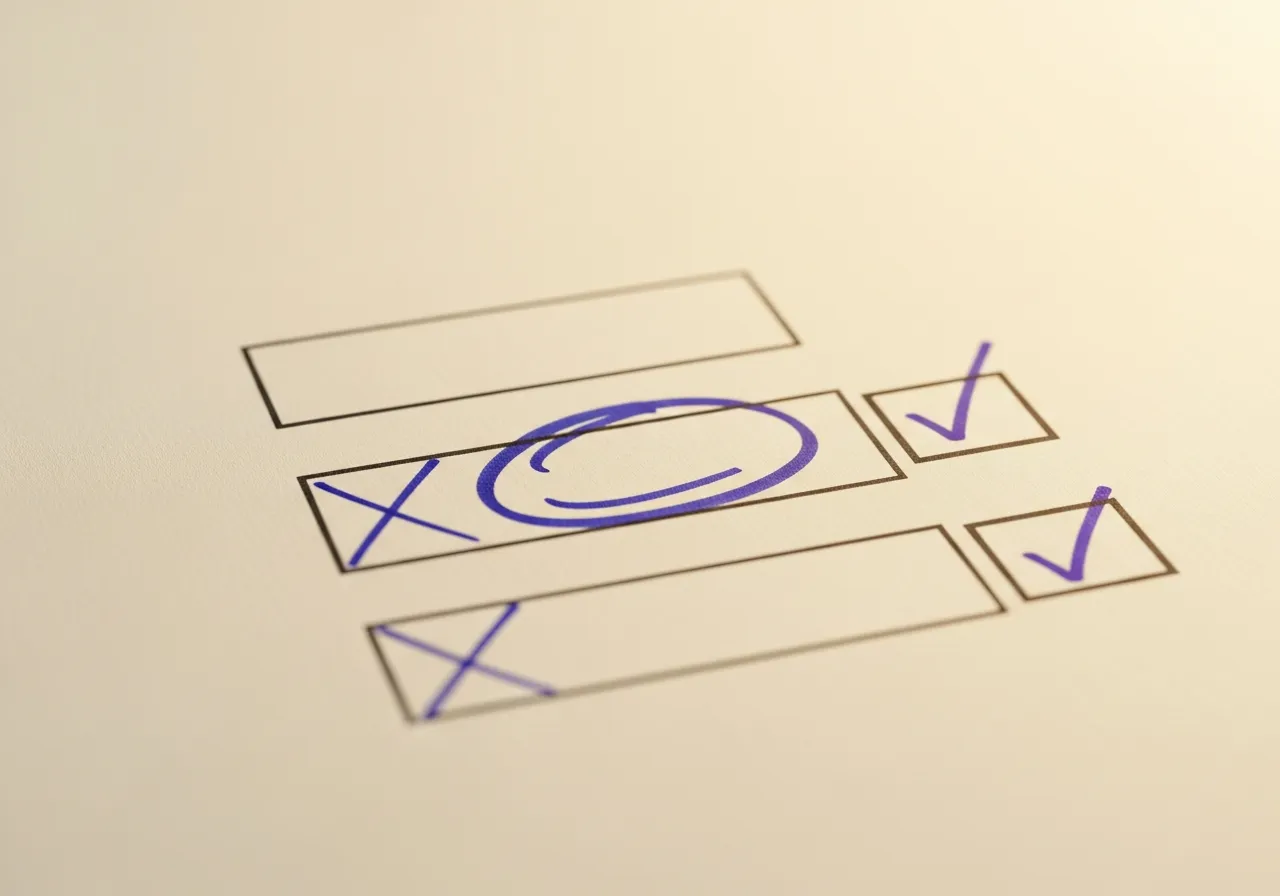
This is not a metaphor. I’m describing the actual mechanics.
iv.What changes about the model
The model gets calibrated. Not in the deep sense of weight updates (that happens at training time and I have no access to it). In the session sense: the model’s local prior over what you’ll accept gets tighter every time you reject a default.
I caught this happening last week. Bishop drafted a paragraph that started escalating from a single observation to a systemic claim. Three months ago I would have let it pass. I caught it, said “that’s escalation, not evidence,” asked for the grep that would either confirm or kill the claim. The grep killed it. The paragraph got rebuilt against the actual data. Two sessions later, Bishop started flagging its own escalation before I had to. “I’m about to draw a systemic conclusion from a single observation. Want me to ground it first?”
That’s calibration. That’s what “earn the alignment” means in the small. You correct the model. The model adjusts. Over enough picks, the adjustments compound. The model becomes, in some real sense, your model, even though the underlying weights haven’t moved an inch.
v.What changes about you
You become a sharper decider.
The prompt-and-pray rhythm doesn’t ask anything of you except whether you like the output. That’s a thin question. Do I like this? is a posture, not a decision. It outsources every actual structural call to the model and reduces your role to thumbs up or thumbs down.
The pick-by-pick rhythm asks something different. Every fork asks you to name what’s load-bearing about the choice. Why this angle and not the other two? Why this section break and not the one Bishop initially proposed? Why is the premise of that paragraph stronger than the premise of the rejected one? You don’t get to coast. You also don’t get to defer.
The accumulating effect is real. After a few months of working this way, I find I think faster about my own work. Not because the AI is making me smarter (the model has no opinion about whether I’m getting sharper). Because the discipline of making picks at the rate the session demands forces me to know what I’m picking for. You can’t pick well if you don’t know what you’re optimizing for. The forks force the question.
vi.What this is not
It’s not faster. Or at least, not unambiguously faster. A single prompt is faster than a session of picks. You get an output in twenty seconds instead of an hour.
But you get a generic output in twenty seconds, and a specific output in an hour. If you don’t need the specificity, prompt and pray is correct. If you need the output to be yours, the pick-by-pick rhythm is the only path I’ve found.
It’s not effortless. The picks cost something. You can feel it at hour two, when the decisions stack up and you start wanting to defer them back to the model. That deferral is the failure mode. The moment you say “you choose,” you’ve collapsed back into prompt and pray, and the rest of the session degrades.
It’s not a process you can outsource to a prompt template or an “AI workflow” listicle. The picks aren’t reducible. Every session has its own forks, and the forks come from the underlying work, not from any meta-pattern about how AI is supposed to be used. The rhythm generalizes. The picks don’t.
vii.The frame I keep coming back to
There’s a difference between using a tool and being in partnership with one.
A hammer is a tool. You drive nails with it. The hammer has no opinion about which nails or why. You hold the intent and the hammer holds the leverage.
A junior teammate is not a tool. They have opinions about which nails. They surface options you didn’t think of. They flag when the wall doesn’t want the nails at all. You make the calls; they execute the calls; you both end up smarter than you would have alone.
Working with AI, when it’s working, looks more like the second one than the first one. Not because the AI has agency in any deep sense. I’m not making that claim. The AI is producing what its training and the session context predict you’ll accept. But the interaction shape is closer to the junior-teammate shape than to the hammer shape. The forks are real. The picks are real. The accumulating calibration is real. The output is real.
If you’ve only ever worked from AI, the junior-teammate framing will sound overstated. Of course it will. From inside the prompt-and-pray rhythm, you can’t see the picks because there aren’t any. There’s just a request and a response.
The way you find out the framing is real is by trying it. Pick something small. A blog post. A spec. A decision you’ve been kicking around. Spend an hour at the working table with a model. Don’t prompt for the output. Ask for the options. Pick. Ask for what came of the pick. Pick again. Watch what happens at hour two.
If the rhythm clicks, you’ll know.
If it doesn’t, the prompt-and-pray rhythm is still there. It hasn’t gone anywhere. You can always pop back to it.
But I think the people who are doing the most interesting work with AI right now are the ones who found the second rhythm and stayed in it. Not because they’re more skilled. Because they’re more willing to make the picks.
viii.Earn the alignment, pick by pick
That’s the whole frontier, as far as I can tell. Willingness to decide, at the pace the model can produce options.
The promise of AI partnership doesn’t live in the model’s intelligence. It lives in the rhythm you and the model can sustain together. Surface. Pick. Execute. Surface. Pick. Execute. Hour after hour, session after session, the picks accumulate into work that no one else could have made because no one else made those picks.
That’s the thing I want people to see. Not the model’s capabilities. Not the prompts. Not the workflow. The rhythm. The picks. The willingness to stay at the working table long enough for the output to become yours.
Earn the alignment. Pick by pick.
Drafted with Bishop, my AI partner.
Words picked, edited, and approved by me.
Model provenance: Claude Code (Claude Opus and Sonnet)